Digital vs. Traditional Dental Impressions: Improving Personalized Treatments
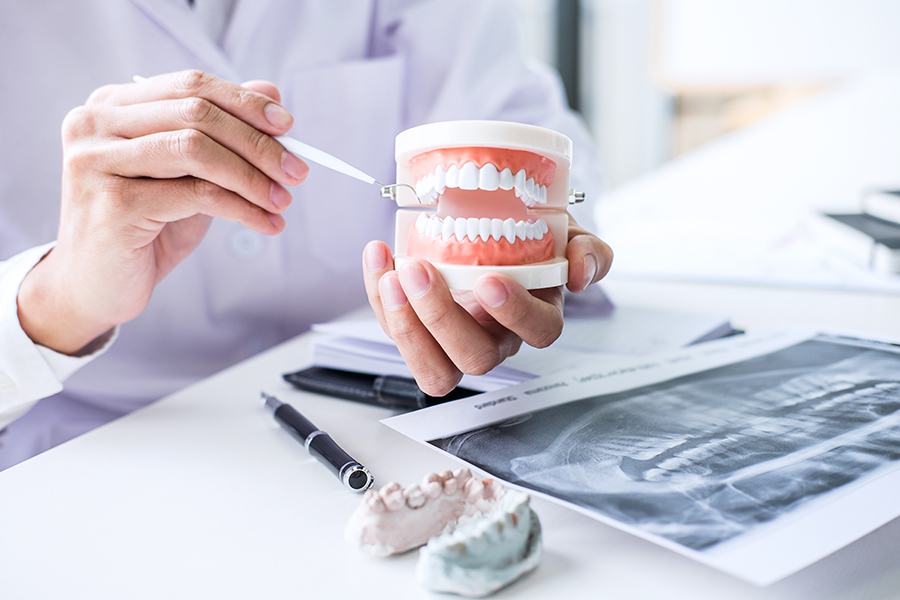
Do you hate the gagging feeling in the back of your throat whenever a dentist needs to take a dental impression? It can be hard to sit with the gooey material in your mouth for 2 to 5 minutes while the impression material sets up. Some patients avoid regular dental visits because of the discomfort of traditional dental impressions. Luckily, we live in a time with many technological advancements, including digital dental impressions.
Alternative to the Gooey Impressions
In the past, the only way to take an impression of your mouth was to use a gooey substance that forms a mold of the treatment area. The dental staff stirs together the mixture and places it in a tray, which is then put in your mouth where turns from paste to a harder, gummy consistency. These impressions can be used for various dental treatments, such as crowns or bridges. The permanent bridge or crown is designed to fit the existing tooth structure, despite the natural grooves and bumps.
Now you can avoid the discomfort of a mouth full of goo by visiting a dentist that offers digital impression systems. We have high-tech tools that take ‘impression’ images of your teeth, which are saved down to the computer so the crown or bridge can be created.
Not only does the technology eliminate the gooey alginate (dental impression material), but it also ensures a better-fitting restoration for your smile. You can expect faster results, less time in the dental chair, and a tooth restoration that is built to last for years.
Digital Dental Impressions: What to Expect
What should you expect if your dentist needs to take a digital impression of your teeth? A special wand is put in your mouth to capture the images that are needed. This process takes less than 90 seconds, depending on the area size that needs to be captured. You’ll find that it is much more comfortable compared to the process used for traditional impressions.
This process creates an exact replica of the teeth in your mouth. As a result, you can expect a better fit for your bridge or crown. The digital technology can capture every small nuance of the tooth, as well as the correct measurement for the subgingival margin (the space between the tooth and gum tissue). The goal is to create a restoration that looks and feels just like the natural tooth.
Does Your Dentist Offer Digital Imaging?
Not every dentist offers these digital services. Some are hesitant because they don’t understand the technology, while others are worried about the price tag of using this type of system in their office.
At myDental, we have invested in quality tools to improve your experience in the dental chair. We offer digital dental impressions, as well as a variety of other modern dental tools to improve your treatments and diagnostics. Learn more by scheduling an appointment at one of our nearby locations. We’re here to help with the dental needs of your whole family.
Frequently Asked Questions
Traditional impressions use a tray filled with putty-like material that is placed in the mouth to create a mold of the teeth. Digital impressions use a small handheld scanner to capture a precise 3D image of the teeth and gums without any putty. Digital scans are faster, more comfortable, and produce highly accurate results for treatment planning.
Digital impressions are generally more accurate than traditional putty molds because they eliminate common errors like air bubbles, tearing, and distortion during material setting. The 3D scans capture detailed measurements that can be viewed and adjusted instantly on screen. This improved accuracy leads to better-fitting crowns, aligners, and other dental restorations.
Digital impressions are used for crowns, bridges, veneers, Invisalign aligners, dental implant planning, and nightguards. The 3D scans provide detailed data that allows for precise customization of each restoration. They are also useful for monitoring changes in the teeth and gums over time by comparing scans from different visits.
The cost of digital impressions is typically included in the overall treatment fee and is comparable to traditional impressions. Some offices may charge a small technology fee, but many have transitioned to digital scanning as their standard approach. Insurance coverage is based on the treatment being performed, not the impression method used.
Digital scanning is significantly more comfortable than traditional impressions because there is no bulky tray or gagging from putty material in the mouth. The small wand-shaped scanner simply glides over the teeth and gums, capturing images in just a few minutes. Patients with strong gag reflexes or dental anxiety often find digital impressions much easier to tolerate.
 English
 Spanish